
This week’s case was from a hitch hiker who had recently returned from Nantucket, Massachusetts with high fevers and jaundice. They presented to the Emergency Department with a five-day history of worsening “flu-like” symptoms, including high fevers, drenching sweats, and significant fatigue.
Laboratory investigations were performed and a blood film made.
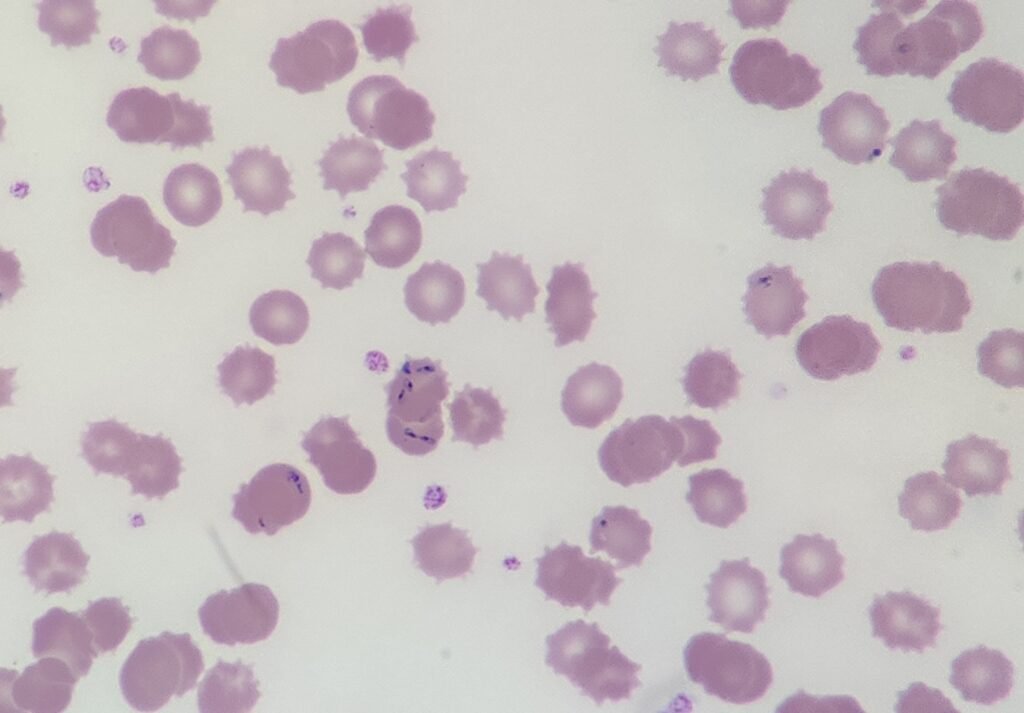
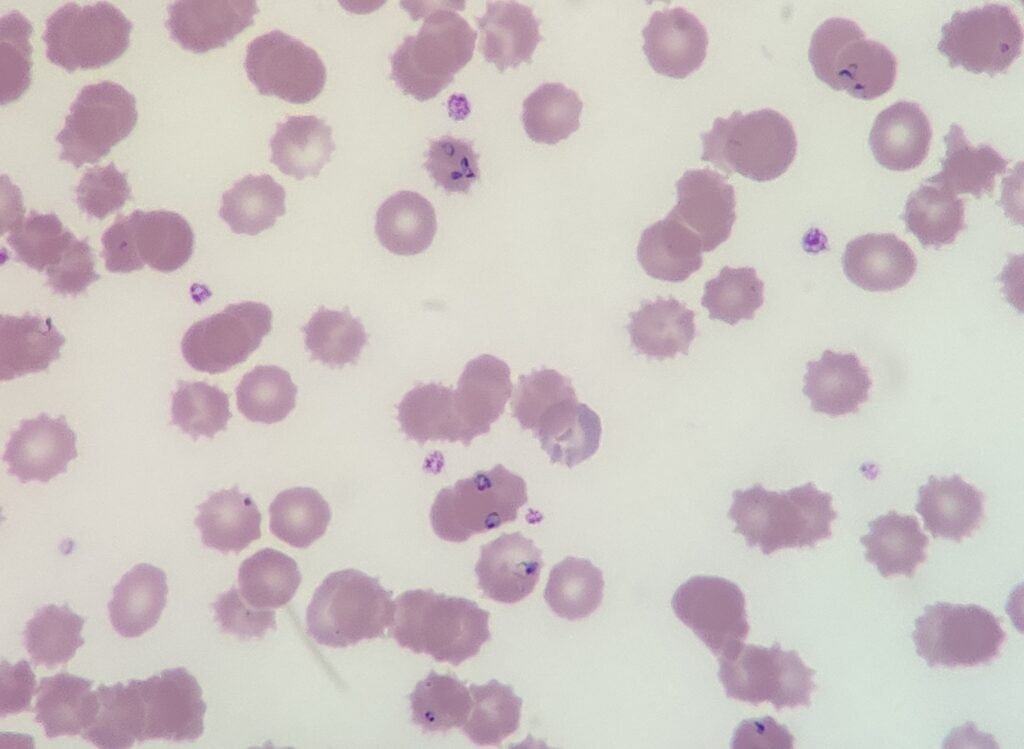
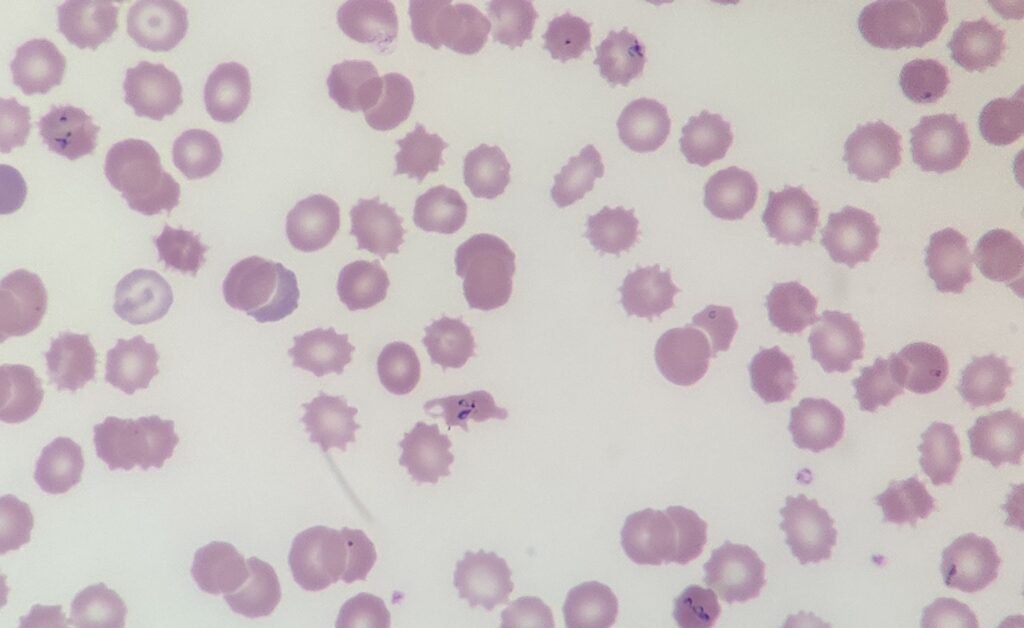
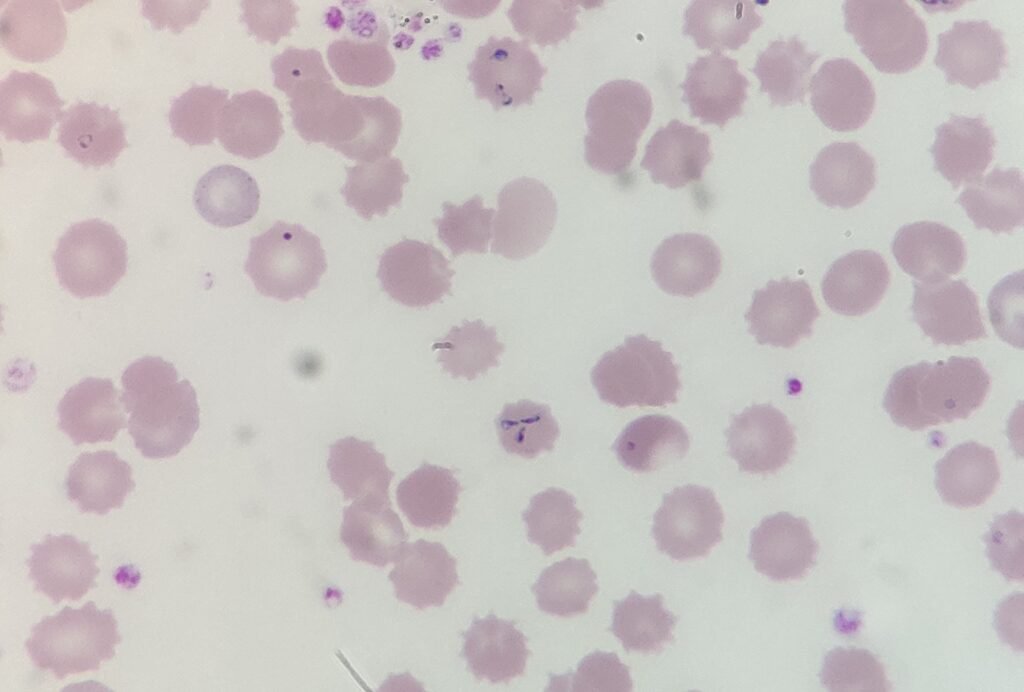
On the peripheral blood film, we observed small, pleomorphic intra-erythrocytic inclusions that closely resemble malaria trophozoites.
- The Rings: These ring forms are often smaller than those of P. falciparum and can vary significantly in shape (ameboid).
- The “Maltese Cross”: The pathognomonic feature of Babesia is the Maltese Cross a tetrad of four daughter merozoites joined together. While our images showed a “partial cross” rather than a perfect tetrad, this arrangement is a definitive “smoking gun” that excludes malaria.
Because the rings look so similar to malaria, we rely on these key laboratory distinctions:
- Extracellular Parasites: Unlike malaria, Babesia rings are frequently seen outside of the red cells (extracellularly).
- No Pigment: Babesia does not produce malarial pigment (haemozoin) within the red cells.
- No Gametocytes: You will never see crescent-shaped gametocytes in a Babesia infection.