
This week’s case featured an 84-year-old male referred after routine blood tests showed an extremely elevated white cell count. He reported increasing fatigue but no other significant symptoms.
Summary of key findings:
-
WBC: 823 ×10⁹/L
-
Exceeded analyser linearity → dilution required for accurate quantitation
-
RBC: 2.69 ×10¹²/L
-
Hb: 84–106 g/L (corrected for WBC interference)
-
Platelets: 164 ×10⁹/L
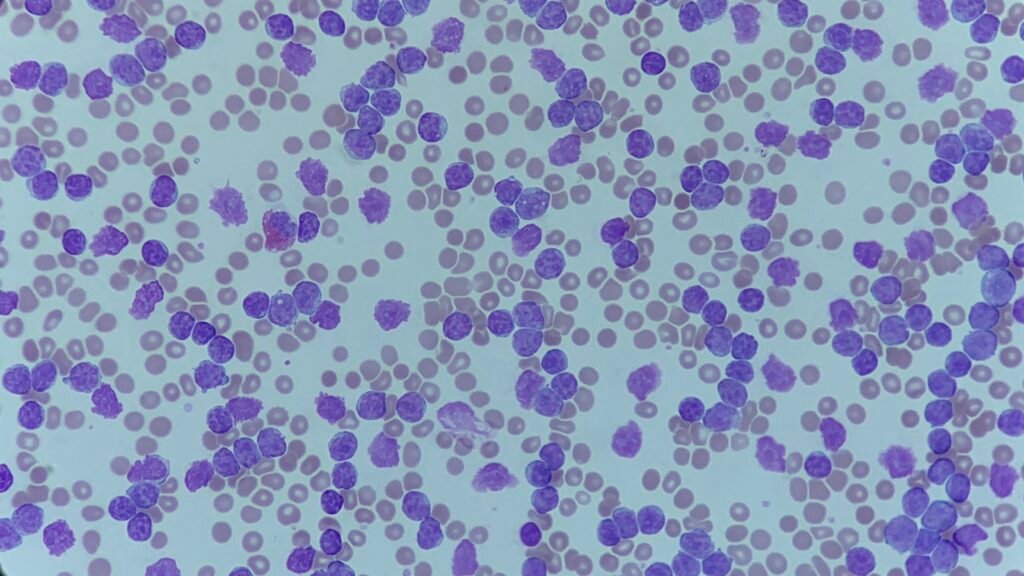
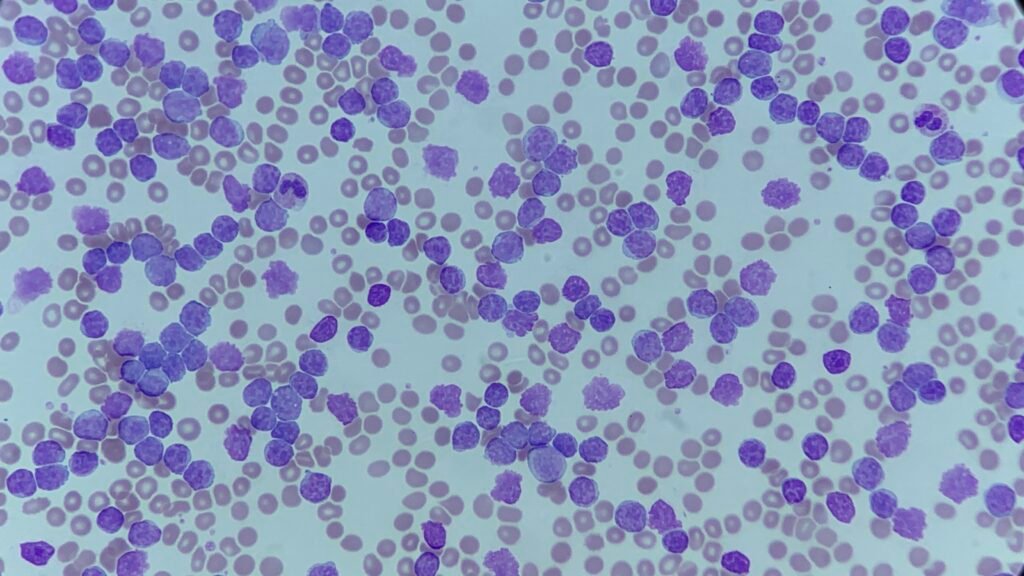
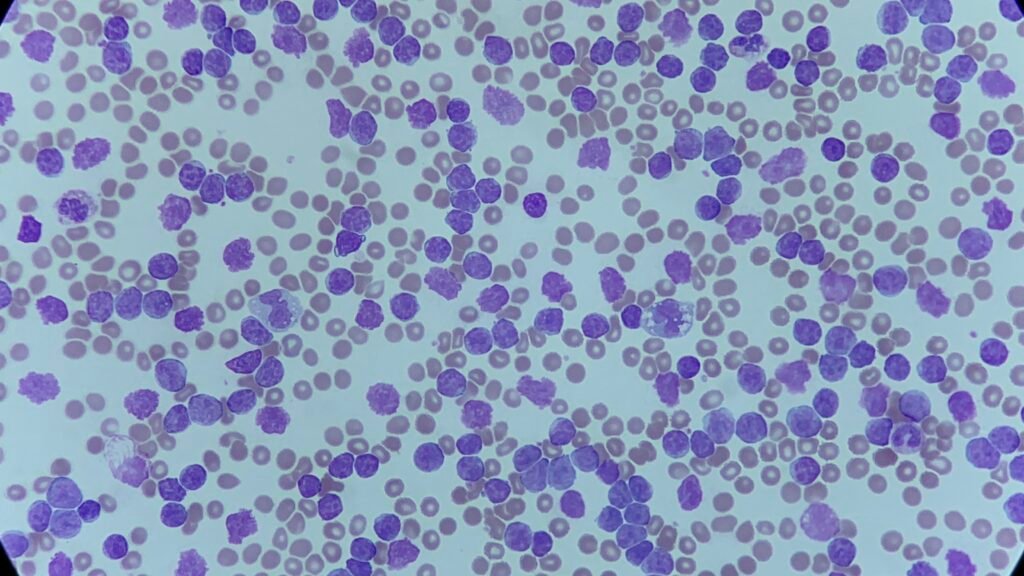
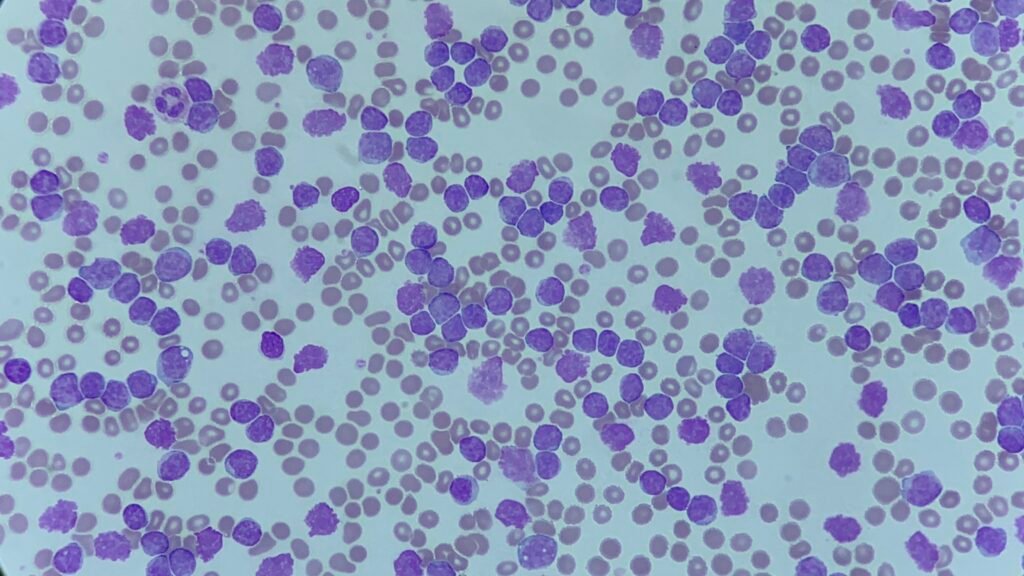
Blood film features:
-
A pleomorphic population of lymphocytes
-
Small to medium-sized cells with a high nuclear-cytoplasmic ratio
-
Clumped (“soccer-ball”) chromatin
-
Occasional prolymphocytes
-
Presence of smear cells
These features are classical for CLL. The combination of a markedly elevated lymphocyte count, characteristic morphology, and a supporting clinical picture strongly points to chronic lymphocytic leukaemia as the final diagnosis.
Dealing with results outside the analyser linearity range:
This case also raised an interesting challenge from an analytical perspective. How do we deal with results that are outside the linearity range of an analyser? Best practice includes:
-
Performing a manual or automated dilution of the sample using the analyser’s recommended protocol
-
Repeating the test on the diluted specimen to obtain a reliable, linear result (remember to multiply the diluted result by the dilution factor to get the actual result!)
-
Documenting the action including the dilution factor
-
Correcting impacted parameters, such as haemoglobin (WBC interference), if required
-
Reviewing histograms/scatterplots for flagging patterns that may require additional checks