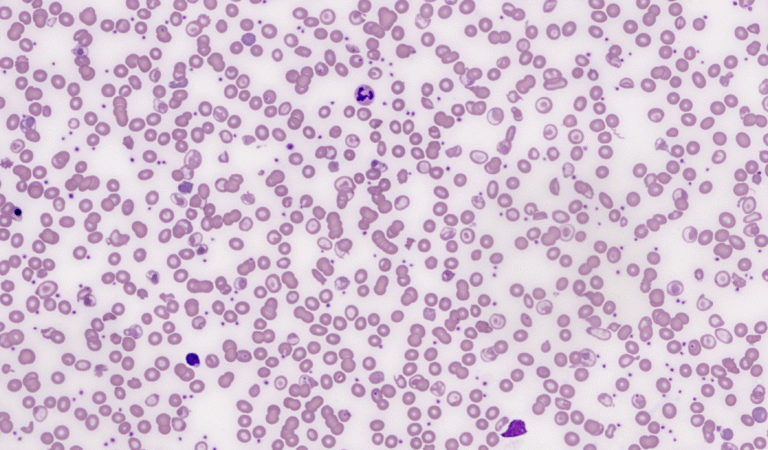
MM260112: Post splenectomy changes
The patient is missing their spleen. In addition to the underlying HbE/β-thalassaemia, the film showed classic “post-splenectomy” features that occur when the body’s primary “quality control” filter is removed.

The patient is missing their spleen. In addition to the underlying HbE/β-thalassaemia, the film showed classic “post-splenectomy” features that occur when the body’s primary “quality control” filter is removed.
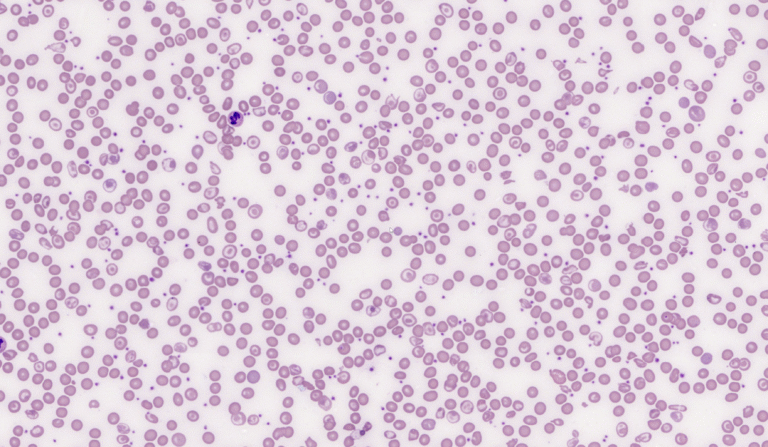
The blood film images are from a transfusion dependent patient who is a compound heterozygote for HbE/beta-thalassaemia.
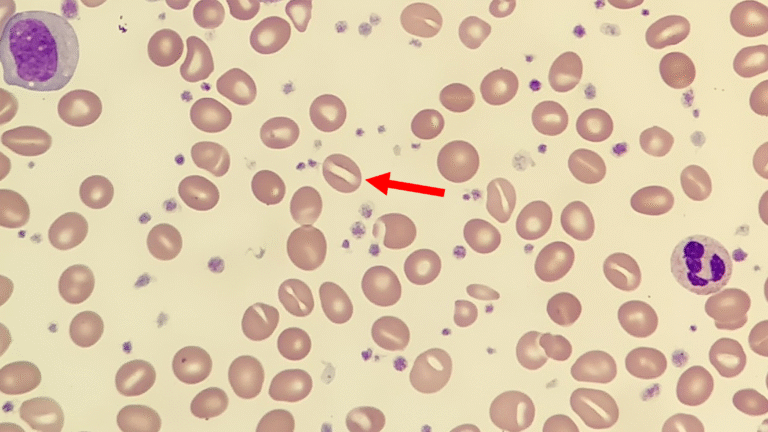
A blood film was prepared for review, and the key morphological feature for participants to identify was a stomatocyte.
This week’s case comes from a 46 year old male who presented to his GP with no significant past medical history, does not take regular medications, and reports no recent infections. He drinks alcohol socially but not excessively.
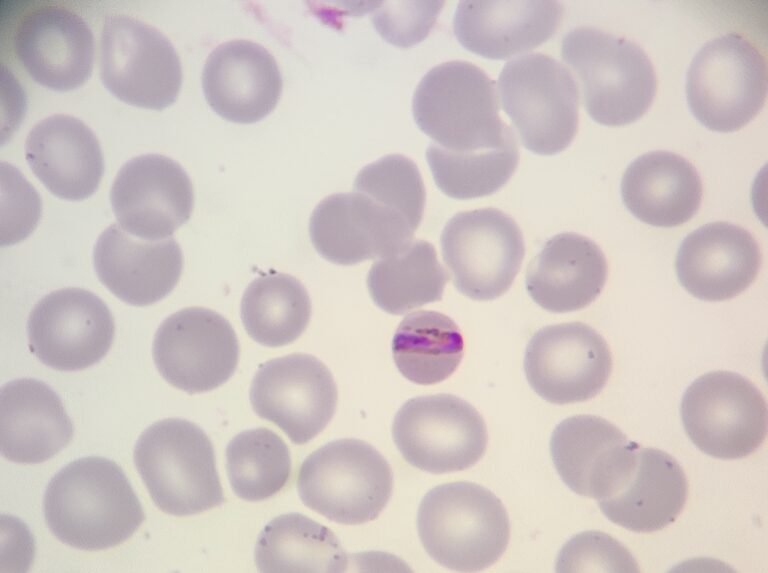
Earlier in the week a couple of blood film images were shared as part of this week’s Morphology Monday case. On closer inspection the blood film revealed both trophozoites and schizonts of Plasmodium malariae.
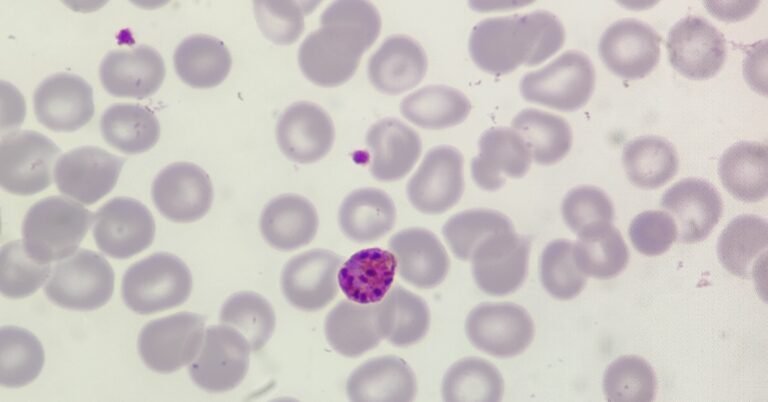
A middle aged traveller presented with mild, recurring fevers and general malaise several weeks and a slightly reduced platelet count. Blood films were made to assess the cause.
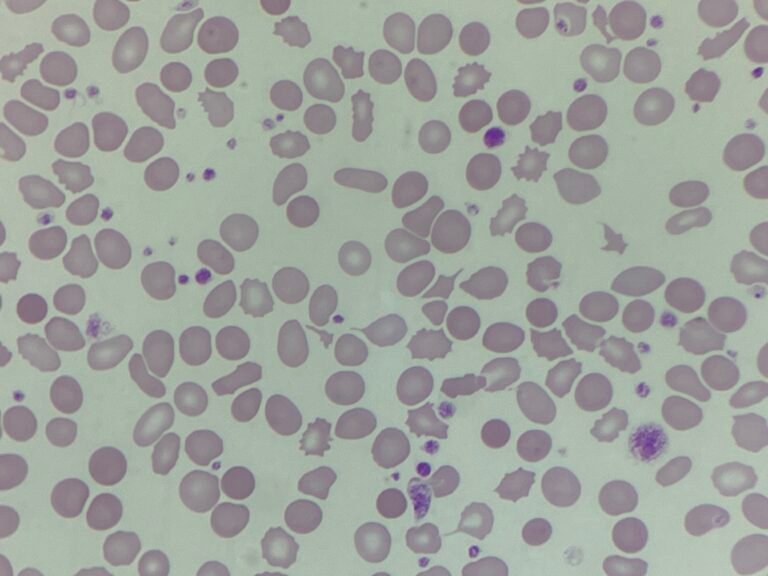
The case underlines how multiple comorbidities can converge to produce complex red cell morphology.
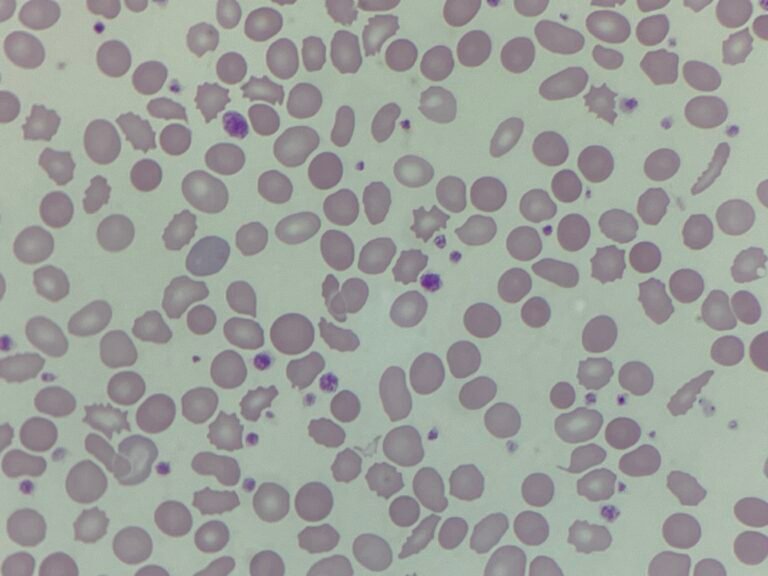
This week’s case comes from a patient with a complex clinical background. The patient presented with anaemia and a raised platelet count, alongside signs of systemic illness.
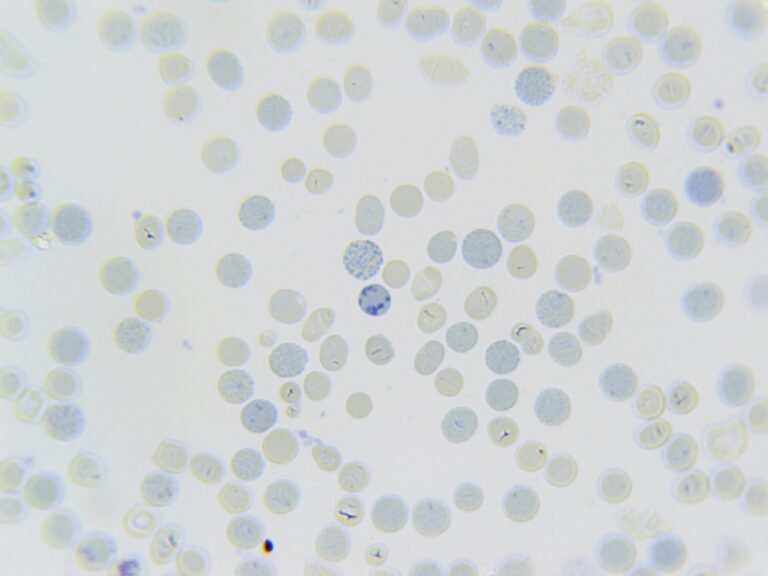
The blood film, stained with a supravital stain, revealed distinctive “golf ball” inclusions, blue precipitates within red cells.
This week’s case comes from a 35-year-old patient who presented with fatigue, mild shortness of breath and intermittent anaemia